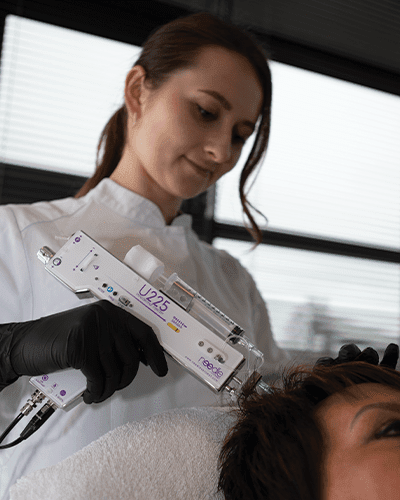




These are small, benign skin lesions that we can treat using a variety of methods.
Milia
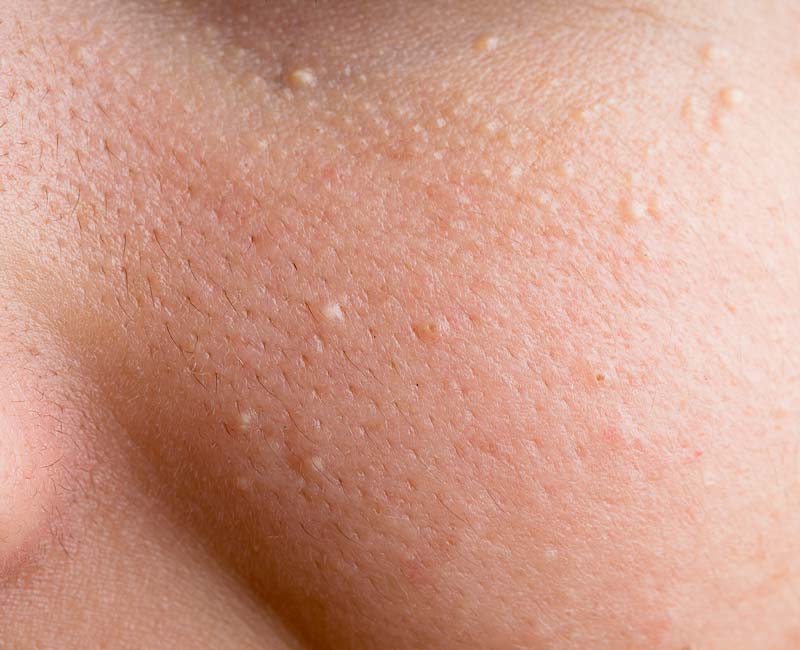
Another word for milia is a barred grain and these are harmless bumps that can occur at any age. It is still unknown how they occur. It is possible that they involve a blockage of the sebaceous gland drainage channels in the epidermis without an inflammatory reaction, as in acne is the case, though.
The skin therapist can remove these using a fine needle or a coagulation laser. This causes absolutely no scarring.
Fibroids
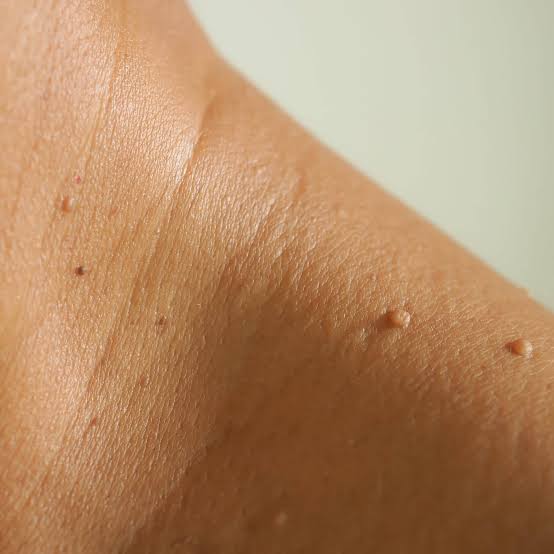
Fibromas are benign skin growths and are also known as skin tags. Medical terms for them include fibroma molle (= soft fibromas), fibroma pendulans (= pedunculated fibromas) or skin tags. They commonly occur on the neck, under the armpits, in the groin or under the breasts.
It is still unclear how these growths arise. There is some relationship with obesity and hormones (arising especially after menopause).
The skin therapist can remove these using a laser by coagulating them. This causes absolutely no scarring. However, the skin may be slightly pink for the first few months. It will return to its normal colour later on.
Spider Naevi
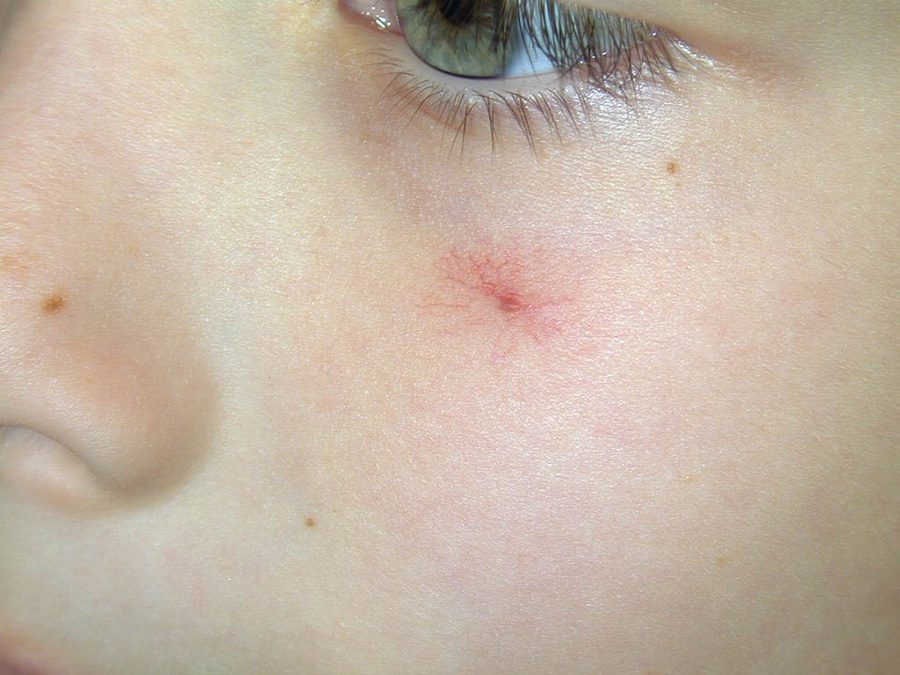
Spider naevi are small, superficial dilated blood vessels in the skin and are also known as spider veins. The medical term is naevus araneus. They are recognisable by a red dot in the centre surrounded by fine, radiating blood vessels. Spider naevi can be flat, but may also be raised. They often occur on the face, neck and décolletage.
The skin therapist can remove these using a laser by coagulating them. This does not result in scarring.
Angiomas
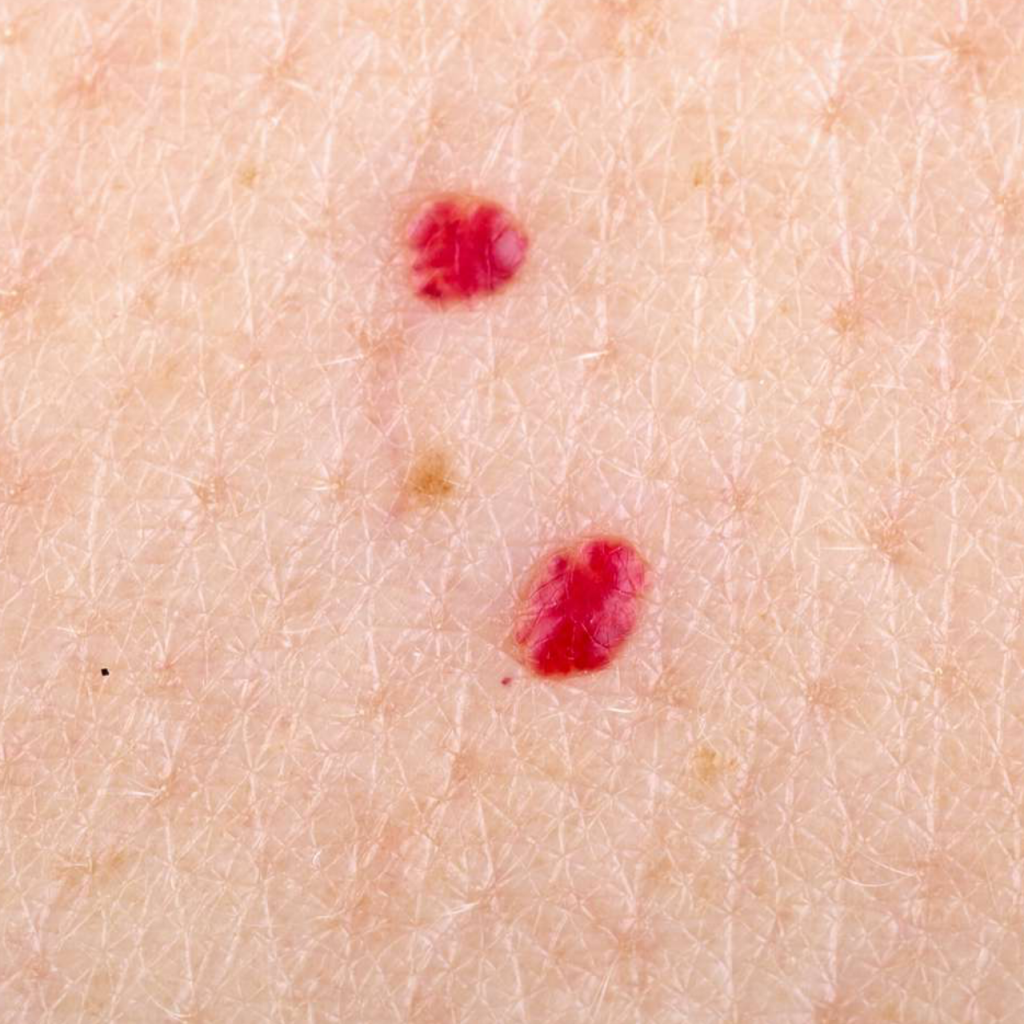
Angiomas are benign skin lesions caused by a localised build-up or dilation of blood vessels. They are also known as haemangiomas or cherry angiomas, depending on the type of angioma. They are usually recognisable as red to purplish-red spots or bumps on the skin. Angiomas often occur on the trunk, arms and legs and can be either flat or raised.
The skin therapist can remove these using a laser by coagulating them. This does not result in scarring.
Age spots
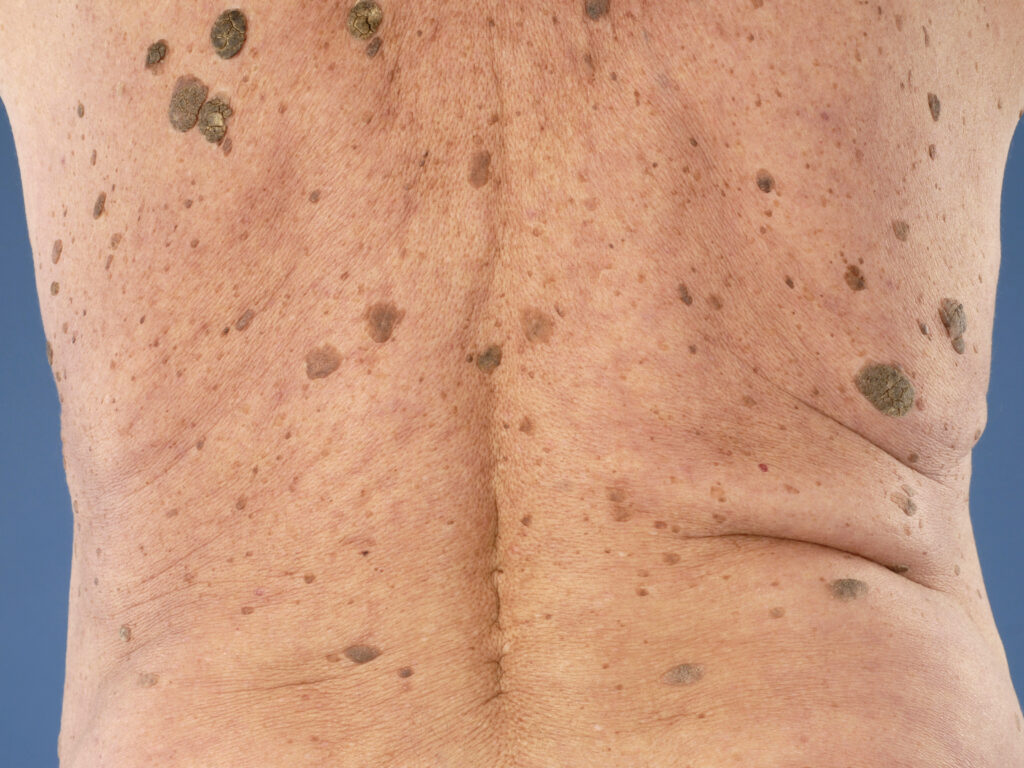
Age spots are benign skin lesions and are also known medically as verrucae seborrhoicae or seborrhoeic keratoses. They are recognisable by their sharply defined, light brown to dark brown colour and an often slightly raised, rough or waxy surface. They sometimes appear to lie flat against the skin, as it were. Age spots mainly occur on the trunk, face and neck.
The skin therapist removes these warts using a laser by coagulating them. This does not result in scarring.
Xanthelasma
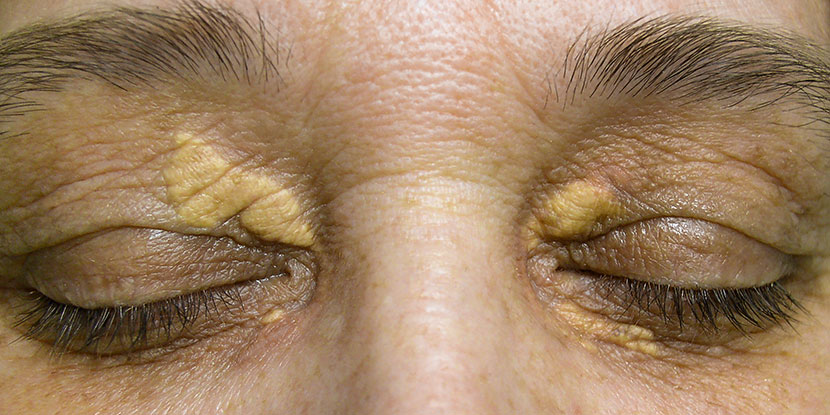
Xanthelasma palpebrare are benign localised flat fatty deposits (= xanthelasma) on and around the eyelids (= palpebrare). These abnormalities are often seen in older or middle-aged people. Sometimes these fatty lumps are a manifestation of excessive blood cholesterol levels.
It results from a disorder in (local) fat metabolism. In some people, blood cholesterol levels are too high; in others, however, normal. The condition may run in the family and is also considered a form of skin ageing.
What are the possible causes?
- High or low cholesterol levels
- A liver disorder
- A metabolic disorder
- Diabetes
- A condition affecting the bile ducts
- In women: the menopause
We can help you with the surgical removal of xanthelasma, which is carried out by a plastic surgeon. This will leave a small, inconspicuous scar.
Moles
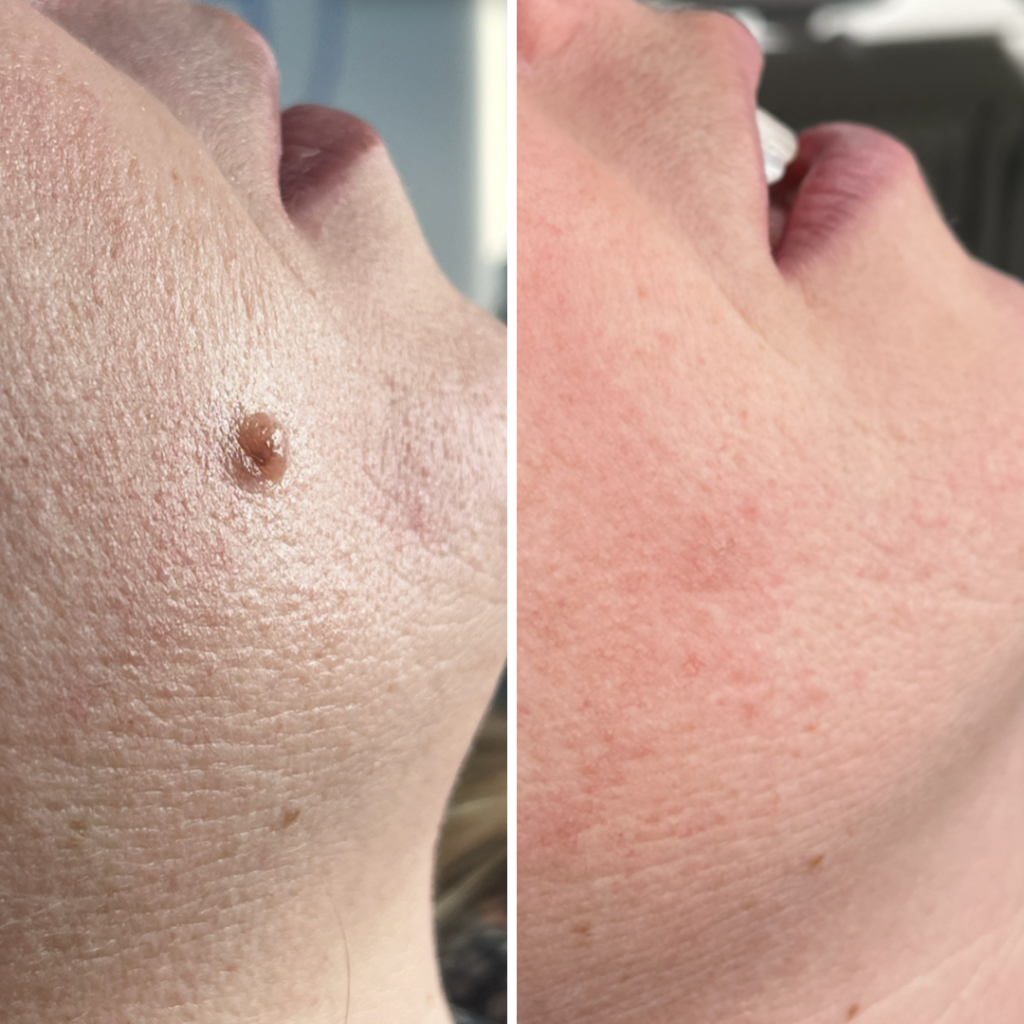
Moles are localised clusters of pigment-producing cells in the skin and are also known medically as naevi. They can range from light brown to dark brown or be skin-coloured, and vary in shape, size and colour. Moles can be flat, but may also be raised. They occur all over the body.
A plastic surgeon can remove benign moles by means of surgical excision. This involves carefully cutting away the mole. A small, thin scar will form after the procedure.